
Showing all 4 results


Our vehicle restraint and seatbelt systems keep wheelchairs and their occupants safely secured while travelling in an accessible vehicle. From wheelchair tie-down straps and docking systems to occupant seatbelts and loading winches, this range covers the securement equipment needed to transport a wheelchair user safely by car or van. Everything ships NZ-wide with free delivery.
When a wheelchair user travels in a vehicle, both the wheelchair and the person need to be restrained — the wheelchair with tie-downs or a docking system, and the occupant with a suitable seatbelt. Correct securement is essential for safety on the road: an unsecured wheelchair can move in the event of sudden braking or a collision. We recommend restraint systems are fitted and used according to the manufacturer’s instructions, and that fitting is carried out by a suitable installer.
There are two main approaches to securing a wheelchair in a vehicle, and the right one depends on how the wheelchair user travels:
If the wheelchair user drives from their wheelchair, or wants to secure independently without a carer, a docking system is usually the right choice. For passenger transport in a shared or family vehicle, tie-down straps are often the practical, affordable option. Our team can help you match a system to your wheelchair and vehicle.
Not every wheelchair is set up for every securement system — docking systems in particular need a compatible bracket fitted to the wheelchair, and the right anchor points fitted to the vehicle floor. Before buying, send us your wheelchair make and model plus your vehicle details, and we’ll confirm what’s needed so the system works safely for your setup.
They’re straps that anchor a wheelchair securely to the floor of a vehicle so it stays in place while travelling. They’re an essential safety item for transporting a wheelchair user by car or van.
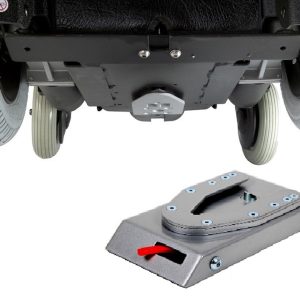
Tie-down straps manually secure the wheelchair and suit most vehicles and users. A docking system is a fixed base the wheelchair locks into automatically, letting the user dock and release independently — better for powered wheelchair users who travel or drive from their chair.
A typical wheelchair tie-down setup uses four points — two at the front and two at the rear — to hold the chair firmly in place. Always follow the restraint manufacturer’s instructions for correct fitting and use.
No. Tie-down straps are for a wheelchair user travelling as a passenger. To secure a wheelchair in the driving position, you need a docking system, which locks the wheelchair to a fixed base and can be operated by the user independently.
Yes. For safe travel, the wheelchair should be restrained with tie-downs or a docking system, and the occupant should be secured with a suitable seatbelt. Both are needed for safe transport.
Docking systems need a compatible bracket fitted to the wheelchair and an anchor base fitted to the vehicle. Not all wheelchairs are set up for docking, so contact us with your wheelchair make and model and we’ll confirm compatibility before you buy.
A wheelchair winch provides powered assistance to pull a wheelchair or scooter up a ramp into a vehicle, reducing the effort and strain of loading a heavy chair.
It’s a cover that helps prevent the seatbelt being accidentally or unintentionally released — useful for carers, and for users who may need extra security while travelling.
Vehicle restraint and access equipment may be funded for eligible users through ACC or Ministry of Health equipment funding via Enable New Zealand or Accessable, usually after an assessment. We can provide a quote to submit to your funder, though we are not a registered supplier and approval is decided by the funder.
Yes. We ship NZ-wide with free delivery on online orders, with remote phone and email support to help you choose the right securement system.
Wheelchair securement is one part of fitting out an accessible vehicle. You may also need:
Not sure what you need for your vehicle? Contact our team with your vehicle and wheelchair details and we’ll help you put together the right setup.