Shop electric wheelchairs in New Zealand, including lightweight folding powerchairs, carbon fibre models and heavy-duty motorised wheelchairs. Compare prices, user capacities and lifting weights to find an option for your home, daily outings and car travel.
Free NZ-wide delivery. 12-month manufacturer warranty. Phone and email support.
Compare wheelchair models and prices or get help choosing a wheelchair. Call +64 9 886 0030.
Electric Wheelchairs for Sale in New Zealand
Compare electric wheelchairs for everyday use, car travel and extra seating support. Our range includes lightweight folding electric wheelchairs, carbon fibre models, heavy-duty powerchairs and reclining options. An electric wheelchair, also called a power chair or motorised wheelchair, uses battery-powered motors and a controller to help you get around without manually propelling the wheels.
Gilani Mobility offers free NZ-wide delivery, a 12-month manufacturer warranty and remote phone and email support. Need help choosing? Tell us your user weight, seating needs and how you plan to transport the chair.
Electric Wheelchair Prices and Model Comparison
Electric wheelchair prices depend on capacity, frame construction, controls and seating features. The examples below show how selected models in our range compare. Prices are in NZD; check the linked product pages for current prices, available configurations and specifications.
Compare selected electric wheelchairs
| Model |
Listed price |
Listed chair weight |
Maximum user weight |
Key feature |
| LiteChair |
NZ$3,990 |
16.75 kg with battery |
100 kg |
Low lifting weight and compact folding |
| Air Hawk |
NZ$5,590 |
Approx. 28.5 kg with batteries and controllers |
180 kg |
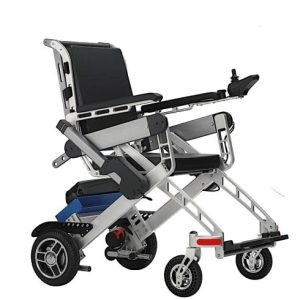
Folding frame with higher user capacity |
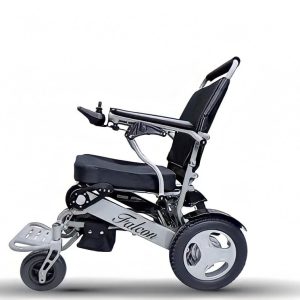
| Falcon |
NZ$5,890 |
28 kg with batteries |
180 kg |
Adjustable backrest and folding frame |
| Champion DC10 |
NZ$7,552 |
Approx. 21 kg total |
150 kg |
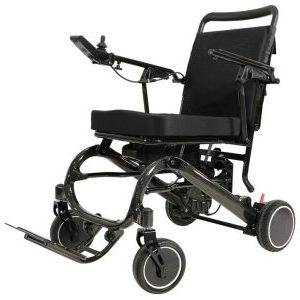
Carbon fibre frame and powered folding |
Chair weight is different from user-weight capacity. For lifting, confirm what can be removed and the weight of the remaining chair. Accessories and configurations can change the total.
Ask us to compare two models for you. Send your user weight, preferred seat width, car model and delivery postcode so we can check the details that matter.
Lightweight Folding Electric Wheelchairs for Car Travel
A portable, foldable electric wheelchair can make storage and transport easier. Compare the actual lifting weight, folded dimensions and folding mechanism before choosing. A compact frame still needs to fit through your boot opening, and the person loading it must be able to handle its weight comfortably.
Our LiteChair lightweight electric wheelchair is listed at 16.75 kg including the battery, with a 100 kg user capacity. For a folding model with a higher capacity, compare the Air Hawk electric wheelchair, rated to 180 kg.
Explore our folding electric wheelchair range. If lifting is difficult, ask about a portable wheelchair boot hoist and whether it suits your vehicle and chair.
Which Electric Wheelchair Is Best for You?
The best electric wheelchair is the one that fits your body, daily routes and transport arrangements. Compare these details:
- Indoor use: overall width, turning radius and clearance through your doors and around furniture.
- Outdoor use: the manufacturer’s permitted surfaces, slope limits, ground clearance and weather guidance.
- Seating: seat width and depth, foot support, backrest adjustment and the controls you can comfortably operate.
- Car transport: folded measurements, lifting weight and whether folding is manual or powered.
- Battery range: choose a model with enough capacity for your usual trips, allowing for hills, user weight and battery condition.
For a more detailed checklist, read our electric wheelchair buyer’s guide.
Carbon Fibre, Heavy-Duty and Reclining Powerchairs
Carbon fibre electric wheelchairs: compare models such as the Champion DC10 if you want a carbon fibre frame and powered folding. Frame material alone does not determine lifting weight; compare complete-chair specifications.
Heavy-duty and bariatric electric wheelchairs: look for a suitable rated capacity and enough seating space. Our bariatric wheelchair range includes options for higher user weights. Check each model’s capacity, seat dimensions and overall width.
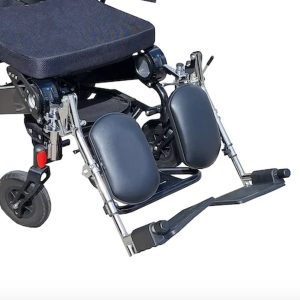
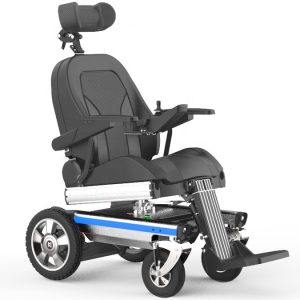
Reclining electric wheelchairs: models such as the OPTIMUM reclining power wheelchair offer adjustable seating features. Recline and tilt-in-space are different functions; ask which adjustments a model provides. If you need specialist seating or pressure management, involve your occupational therapist or seating assessor.
Why Choose Gilani Mobility?
Our team draws on Gilani’s engineering experience to explain wheelchair specifications and help you compare suitable options. We can discuss frame size, controls, battery range and transport requirements before you order. Learn more about Gilani Mobility.
We supply customers across New Zealand, including Auckland, Wellington, Christchurch, Hamilton, Tauranga and Dunedin. Contact us with your postcode to confirm availability and estimated delivery. After-sales support is provided remotely by phone and email; we do not operate a physical NZ showroom or service centre.
See an Electric Wheelchair in Use
Watch our Air Hawk video to see its folding mechanism and controls. Features vary between models.
Frequently Asked Questions
What is the difference between an electric wheelchair, powerchair and motorised wheelchair?
These names generally describe the same type of powered mobility equipment. The important differences are between individual models: seating, controls, size, capacity, folding and where they are designed to be used.
Which lightweight electric wheelchair will fit in my car boot?
Measure the boot opening and usable space, then compare all three folded dimensions of the chair. Also check the height you need to lift it. A folding wheelchair is not guaranteed to fit every car.
Can a carer operate an electric wheelchair?
Some models support attendant controls or remote driving. Confirm the exact function before ordering: a remote that folds the chair may not control driving, and driving controls must be approved for the intended use. Ask our team which models and accessories suit your needs.
Can I take a folding electric wheelchair on a plane?
Acceptance depends on the airline, aircraft, chair dimensions and battery specifications. A folding frame or removable battery does not automatically make a chair airline-approved. Provide the airline with the model, weight, dimensions and battery details before travel. See Air New Zealand’s wheelchair and battery requirements.
How far can a power wheelchair travel on one charge?
Range is model-specific. The LiteChair lists up to 10 km, while the Air Hawk lists up to approximately 18 km. Actual distance depends on user weight, gradients, surfaces, battery condition and other factors. Allow a reserve rather than planning to use the full advertised range.
Is an electric wheelchair or mobility scooter better?
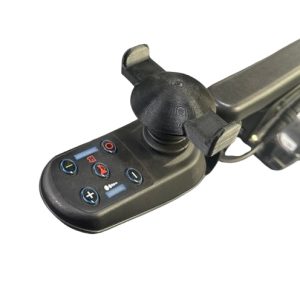
Compare your seating requirements, ability to operate the controls, indoor space and outdoor routes. Powerchairs commonly use a joystick; scooters generally use tiller steering and have different space requirements. View our mobility scooters to compare the options.
Can I get funding for an electric wheelchair in New Zealand?
Eligible people may receive equipment support through Disability Support Services or ACC for injury-related needs, subject to assessment and approval. Start with your assessor or ACC contact before purchasing. Gilani Mobility is not a registered supplier under these schemes; we can provide specifications and a quote, but cannot guarantee funding or reimbursement. See official NZ equipment support information.
Can you help with wheelchair ramps and accessories?
Yes. Browse our wheelchair ramps and ask about compatible accessories. For ramp selection, provide the rise, available space, wheelchair model and combined user-and-chair weight.
Need help comparing electric wheelchairs? Contact Gilani Mobility or call +64 9 886 0030 for product advice and a quote.